There are things that can throw one in life, like seeing a man wearing a cape in Brixton or a person wearing their headphones outside of their hat. These sort of things throw you because they are not considered normal.
A few things that have not exactly thrown me but have given me pause for thought have been; people who do not like chocolate – I really do not understand this, so maybe that throws me a little. I once knew a woman who would lose weight over the Christmas period because she did not like Christmas foods. Odd but not unprecedented.
Something that is odd for me is my dislike of sweetcorn. I like the smell of it and the look, I just don’t like the taste. Unrelated to food, the oddest and most discombobulating dislike I have ever heard was many years ago when I worked in a department store. One of my work colleagues said her husband did not like music. No sort of music? None. This floored me. I was told this over twenty years ago and it is still one of the weirdest dislikes I have ever encountered. Who doesn’t like music?
Back to food. A common food amongst black people, even to the point of parody, is chicken. It is rare the black person who does eat or like chicken, though I did know a girl, a black girl, who did not like chicken. She did love music though.
Chicken, along with rice and peas, is another staple of black households. Generally, Sunday is chicken day but truthfully, any day can be chicken day. Roast chicken, fried chicken, barbecue chicken, all varieties are welcome.
As in all things, preparation is key. A bit of salt and pepper and whack it in the oven is not good enough and by not ‘good enough’ I don’t mean to add a bit of thyme for flavour. Preparation starts with the cleaning of the chicken, which involves lemons and water and no soap or bleach.
What goes on the chicken varies depending on how one wants it to taste. The most important thing, almost more important than the flavour of the fowl, is that it not be dry. There is nothing worse than a dry bird.
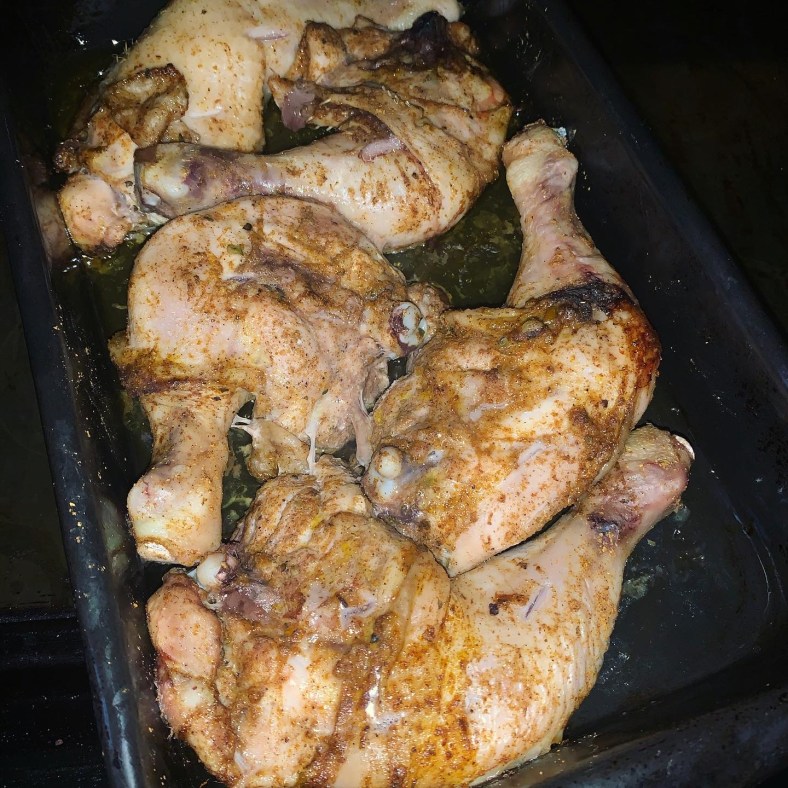
A well seasoned and cooked piece of chicken is a thing of beauty. It is pleasing to all of the senses when done properly. With the skin on and cooked to perfect orange/bronze, a leg and thigh joint gets the juices flowing as soon as one’s eyes gaze upon it. The aroma of just-right cooked chicken is better than fresh bread and if the taste matches the look and the smell, it is happy days in the belly department!
Many find red meat too heavy for their taste and pork has a lot of negative connotations attached to it but chicken, the trusty fowl, is always welcome in many a black household.
Category food
Rice And Peas, Not Rice With Peas.
The term rice and peas conjure up different images for different people depending on your upbringing and culture. For the indigenous people of the UK, rice and peas is not a staple dish and as such does not muster up a particular image. If anything, they probably are likely to think of rice with peas. Green peas. Placed alongside on the plate next to rice as an accompaniment.
For black people, African and Caribbean, rice and peas is exactly that; rice and peas. Never rice with peas. For people of a certain generation, when school dinners were common in schools, the horrifying thought of Caribbean cuisine day in the canteen is a memory to shudder at.
The aforementioned rice and peas were, always, rice with peas. Green peas. Ugh. Along with the misrepresented rice and peas, we would suffer the likes of curried chicken – lord knows where they got that from! – random spicy, unrecognisable meats and maybe some sort of ‘exotic’ vegetable. Grated carrots.
As the world has gotten smaller, through the internet, and more cultural things are known, there has been some improvement with regards to Caribbean cuisine, not much mind you. When even the likes of Jamie Oliver are making missteps with his efforts at Caribbean food with all the resources he has at his disposal, you can only believe it is deliberate and wilful ignorance.
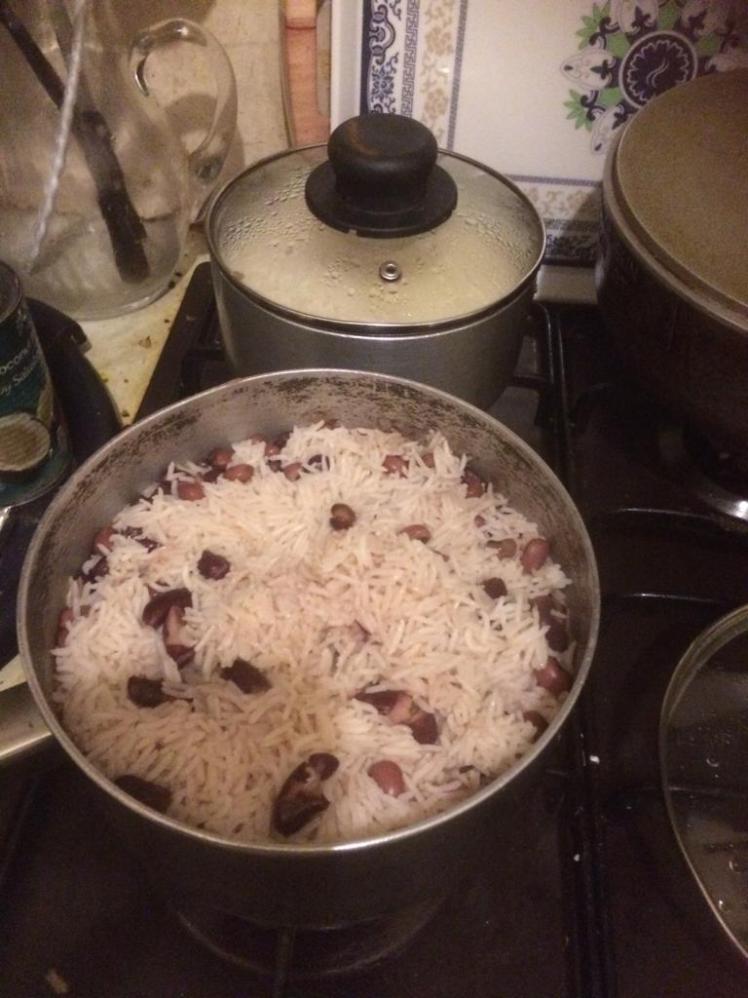
Rice and peas is a pretty common dish in a black household. Rice without peas was common growing up. Rice and peas was normally reserved for Sunday dinner, with excess spilling into Monday’s meal. Not all rice and peas are created equal or the same. Even though the term refers to boiled rice mixed with peas or beans, it is not always the same peas.
In my household growing up, black-eye peas were probably the most common ones used but on occasion, we would have Gunga peas – easy to get wrong and end feeling like you’re eating bullets! – or red kidney beans or a mix of the three.
The peas would always be cooked or semi-cooked first. The rice, American long grain usually, went in afterwards. Add salt and let the water boil away. The peas or beans would colour the rice, giving it a pale brown or pink/brown colour. Beautiful.
The perfect accompaniment to poultry, meat or fish, rice and peas for black people is like pasta for Italians. No green peas!
Not A Pasty.
“So it’s a pasty?”
“No. A patty.”
“What’s it like?”
“It’s got meat in it and a pastry covering -“
“Like a pasty?”
“Yes but -“
“So it’s a pasty?”
“No – yes. Yes, it’s a pasty.”
The above is a variation of a conversation many black people will recognise as the ‘so what is a Patty?’ question. There are other common food questions we have to contend with: what is hardough bread? Curry goat? What’s curry goat?! As for the roti conversation that is an entire blog on its own!
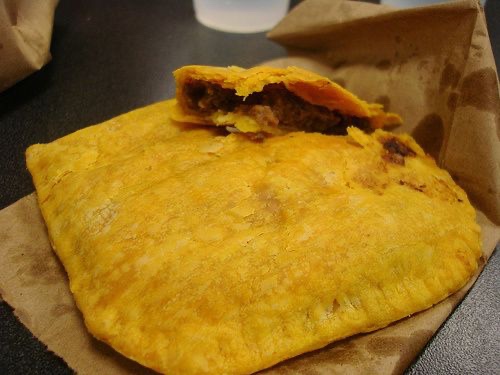
For this blog I will stick to the patty conundrum. The Jamaican patty – other West Indies islands and regions make them but they are most readily associated with Jamaica – is, in the purest sense, a peppered minced beef filled, half moon, flaky pastry snack. It is not a pastie.
Available in larger supermarkets, with various fillings, the patty of today is not the patty of my or my peers childhoods. If you purchase a patty today, those that are massed produced for stores, it is very different from the patty of old. The present day, plastic wrapped, mass consumption patty of today is a pallid, beige-yellow, smooth pastried version, filled with a mass-pleasing mix of potato, onions and mildly peppered minced.
In my and many of my peers youth, a pattie was yellow. Corn starch yellow, filled to bursting with peppered beef and the pastry was messily flaky, breaking apart with every bite. If you know where to go, you can still find these patties of old. Already a substantial meal on its own, sometimes you could purchase a patty in a Coco bread bap, a dense white bread not dissimilar to hardough bread.
So if you are lucky enough to know where to get the old school patty or should come across them in a jaunt through Brixton market, buy one, eat it and savour it. You may not get the opportunity for very much longer.